








Elemental Analysis | ICH Q3D(R2) | ICP-MS | NABL Accredited | Auriga Research
Elemental analysis covers two complementary capabilities in pharmaceutical testing: trace inorganic elemental impurity quantification per ICH Q3D(R2) — effective 24 September 2022 — and CHNS combustion analysis for organic elemental composition (carbon, hydrogen, nitrogen, sulphur). ICH Q3D(R2) requires all marketed pharmaceutical products to demonstrate control of 24 target elemental impurities against permitted daily exposure (PDE) limits derived for the specific route of administration — oral, parenteral, inhalation, and cutaneous/transcutaneous.
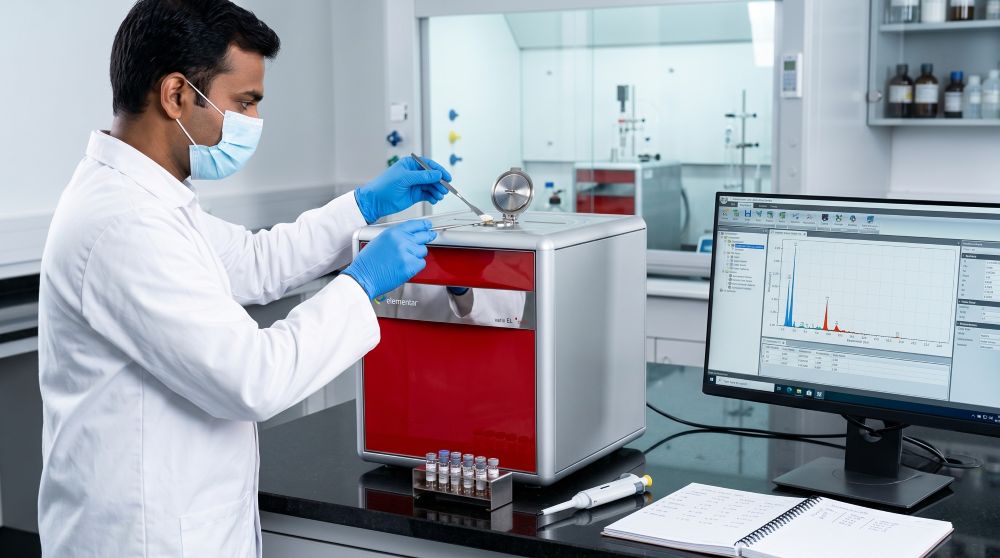
Auriga Research operates 5 ICP-MS units across 3 labs — Delhi HQ (Arbro Analytical Division), Baddi, and Bangalore — with Bangalore hosting multiple units and being USFDA Inspected. All 24 ICH Q3D(R2) elements are quantified in a single ICP-MS run with sub-ppt detection across most analytes, well below the PDE-derived specification limits. R2 introduced new PDEs for Gold (Au), Silver (Ag), and Osmium (Os) — these are included in the standard panel as of all reports issued from September 2022 onwards.
CHNS combustion elemental analysis — organic elemental composition with carbon, hydrogen, nitrogen, and sulphur determination, plus optional oxygen by pyrolysis — is delivered from Manesar (Plot 136, Sector 5, IMT Manesar), the USFDA Inspected facility. Reports are NABL accredited under ISO/IEC 17025:2017 and formatted for CDSCO, USFDA, EMA, and PMDA dossier submission. Catalyst-residue analysis, raw-material trace metal profiling, and ISO 10993-18 medical-device characterisation are all in scope.
5 ICP-MS Units Across 3 Labs
Delhi HQ · Baddi · Bangalore — with multiple ICP-MS units at Bangalore. Dedicated capacity for ICH Q3D(R2) elemental impurity testing without backlog, even across multi-batch submission programmes. Bangalore is USFDA Inspected. CHNS combustion analysis at Manesar (USFDA Inspected).
Six Elemental Analysis Services
Each card maps the service to the analytical method, the governing regulatory reference, and the Auriga lab where it is performed.
Elemental Impurity Testing per ICH Q3D(R2)
All 24 ICH Q3D(R2) target elements quantified by ICP-MS against PDE-derived specification limits. Delhi, Baddi, and Bangalore.
CHNS(O) Elemental Analysis
Carbon, hydrogen, nitrogen, sulphur, and oxygen determination by combustion / pyrolysis for organic identity and purity. Manesar (USFDA Inspected).
Heavy Metals in APIs per EP 2.4.8
Heavy metals testing in APIs and excipients by ICP-MS per EP 2.4.8, USP 232 / 233, and Indian Pharmacopoeia general references. Delhi, Baddi, and Bangalore.
Catalyst Residue Analysis by ICP-MS
Pd, Pt, Rh, Ru, Ir, and Os residue quantification in synthetic APIs by ICP-MS. Supports route-of-synthesis characterisation and process clean-up confirmation.
Elemental Analysis for Medical Devices
Elemental characterisation of medical-device extracts by ICP-MS per ISO 10993-18 chemical characterisation framework. Delhi, Baddi, and Bangalore.
Trace Metal Profiling in Raw Materials
Trace metal screening in APIs, excipients, water, and intermediates by ICP-MS at sub-ppt detection levels. Supports incoming raw-material specification.
Project Timelines
Indicative TAT from sample receipt. Confirm exact timeline with your SPOC at quote stage based on element panel, matrix, and sample queue.
| Service Type | Turnaround Time |
|---|---|
| CHNS Elemental Analysis (Manesar) | 3 to 5 business days |
| ICH Q3D(R2) Elemental Impurities by ICP-MS | 5 to 7 business days |
| Rush Testing (CHNS or ICP-MS) | 2 to 3 business days |
| Combined CHNS + ICP-MS Package | 7 to 10 business days |
| Method Development + Validation | 2 to 3 weeks |
How It Works
Get a Quote
Share your API or drug product, the synthetic route and catalysts used, and the dossier type. Your SPOC confirms which of the 24 ICH Q3D(R2) elements are required.
Collect and Send Your Sample
Prepare your sample per instructions confirmed by your SPOC at quote stage. Each sample is bar coded and registered in YLIMS on receipt.
Testing and QA Review
Your sample is tested under NABL-accredited conditions. All results pass through formal QA review including instrument log check, reference standard verification, and analyst sign-off.
Receive Your NABL Report
Your NABL-accredited report is delivered digitally within the committed TAT, formatted for CDSCO, USFDA, and regulatory submission. Track status via YLIMS.
Who Needs Elemental Analysis
- Pharma manufacturers demonstrating ICH Q3D(R2) elemental impurity compliance in CDSCO or USFDA dossiers.
- Generic developers needing elemental impurity data for ANDA submissions and DMF inclusions.
- API manufacturers characterising catalyst residues (Pd, Pt, Rh, Ru, Ir, Os) from synthetic routes.
- Medical device manufacturers requiring ISO 10993-18 chemical and elemental characterisation of device extracts.
- Topical and transdermal product manufacturers needing cutaneous and transcutaneous PDE-route reporting under R2.
- Excipient suppliers and raw-material vendors providing elemental data sheets to drug-product customers.
- Quality control teams performing routine elemental impurity release testing on commercial APIs and finished products.
- Regulatory affairs teams compiling Q3D Risk Assessment dossiers and tier-based elemental impurity control strategies.
Why Auriga for Elemental Analysis
5 ICP-MS Units Across 3 Labs
Five ICP-MS units distributed across Delhi, Baddi, and Bangalore — sub-ppt detection across all 24 ICH Q3D(R2) elements in one run. Dedicated capacity for multi-batch submission programmes.
USFDA Inspected at Manesar and Bangalore
ICP-MS data from Bangalore and CHNS data from Manesar are generated at the USFDA Inspected facilities — accepted in USFDA dossiers without re-testing.
ICH Q3D(R2) Compliant Since September 2022
All reports issued from 24 September 2022 onwards reference Q3D(R2) including the new Gold, Silver, and Osmium PDEs and the cutaneous and transcutaneous route framework.
NABL Reports Accepted by CDSCO, USFDA, EMA
NABL accredited (ISO/IEC 17025:2017) elemental impurity reports accepted by CDSCO, USFDA, EMA, and PMDA submissions. Formatted against the R2 PDE tables and the product dose assumption.
CHNS + ICP-MS Under One Accreditation
Organic CHNS combustion analysis at Manesar and inorganic ICP-MS at Delhi, Baddi, Bangalore — both under the same NABL scope, one consolidated report, one TAT.
Catalyst Residue + ISO 10993-18 in Scope
Pd, Pt, Rh, Ru, Ir, Os catalyst residue analysis for synthetic API routes, plus ISO 10993-18 elemental characterisation of medical-device extracts — all on the same ICP-MS platform.
5+
NABL Accredited Labs
5 Cities
Delhi · Manesar · Bahadurgarh · Baddi · Bangalore
12,000+
Clients Served
1985
Arbro Group · Auriga Research
Regulatory References
- • ICH Q3D(R2) — Guideline for Elemental Impurities, effective 24 September 2022. New PDEs for Gold (Au), Silver (Ag), Osmium (Os); cutaneous and transcutaneous route framework.
- • USP <232> / <233> — Elemental Impurities Limits and Procedures.
- • EP 2.4.8 — European Pharmacopoeia Heavy Metals.
- • Indian Pharmacopoeia — Elemental impurity general references.
- • ISO 10993-18 — Chemical and elemental characterisation of medical devices.
- • ICH Q2(R2) — Validation of Analytical Procedures (March 2024).